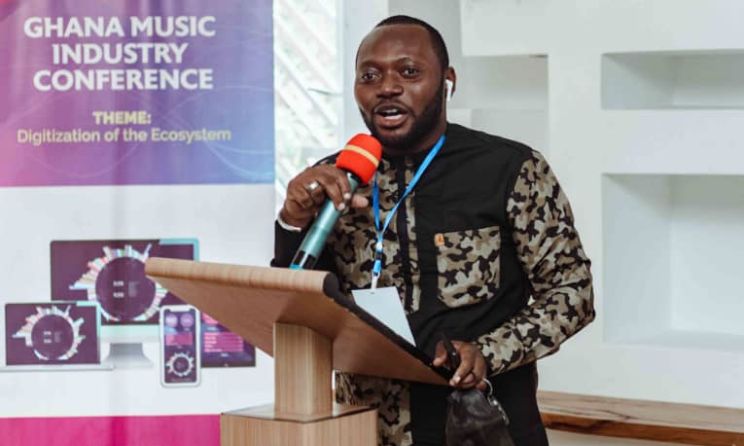
In recent years, the entertainment industry has undergone a seismic shift, revolutionizing our appreciation and engagement with creative works. Digitization has emerged as a powerful tool for artists, from budding entrepreneurs to aspiring Grammy and Golden Globe winners, enabling them to chase their dreams and monetize their talents.
Platforms like YouTube, TikTok, and Facebook have become the dazzling stages where passion meets profit, ushering in a new era of influencers and digital marketers. However, as Ghana’s creative economy strives to flourish, it finds itself ensnared in a digital labyrinth. What was once celebrated as a golden opportunity has transformed into a double-edged sword, leaving artists feeling more vulnerable than ever.
While these platforms promise a global audience, they frequently ignore issues of piracy and offer meager compensation, jeopardizing the very creativity they claim to support. This paradox of the digital age reveals a harsh reality: the quest for visibility often sacrifices financial stability, rendering Ghanaian talent both exposed and exploited.
The Struggles of Ghanaian Musicians in the Digital Age
In a world where music is just a click away, one might expect Ghanaian musicians to thrive on the digital wave. Yet, the reality is starkly different. The once-booming market for physical sales has diminished, and investors who once championed artists have sought greener pastures. Consequently, the music industry is gasping for air, struggling to adapt to a rapidly evolving landscape.
A major obstacle to a vibrant digital music scene in Ghana is the heavy reliance on credit and debit cards for streaming. With only about 15% of Ghanaians possessing these financial tools, the majority find themselves locked out of the digital marketplace. Despite being in the home territory where artists have their strongest fan base, they capture a mere fraction of the market—only 5,164,112 out of a vibrant population of 34,427,414.
The distribution chain has become a convoluted maze, where middlemen proliferate, leaving artists with scant returns. Distributors, sub-distributors, and even sub-sub-distributors vie for a piece of the pie, resulting in musicians facing precarious financial situations where earnings barely cover basic needs.
Adding to this chaos, many artists remain unaware of how digital platforms operate, making them susceptible to exploitation. Some even choose to disengage from the digital arena, inadvertently inviting pirates eager to steal their work and profit from it. With little recourse, these artists watch helplessly as their creations proliferate, credited to everyone but them.
Worse yet, the digital landscape in Ghana has become a playground for unscrupulous websites like ghanamotion.com and ghanasongs.com, which shamelessly offer music for free while profiting from advertisements and clickbait. Instead of empowering artists, digitization has turned into a windfall for opportunists, leaving creators in a precarious position.
The Disruption of Ghanaian Cinema
Digitization and globalization have also impacted the Ghanaian film industry, but not always positively. Once reliant on VCD and DVD sales, the industry has seen its revenues plummet as these formats become obsolete. With digital streaming services on the rise, traditional production and distribution methods are faltering, leaving filmmakers struggling to adapt.
As streaming becomes the preferred method of entertainment, cinema attendance declines. Families no longer flock to theaters; instead, they prefer the comfort of their homes. This shift doesn’t just hurt box office sales—it robs audiences of the communal experience that once brought them together.
Globalization has added another layer of complexity, shifting the tastes of younger viewers toward Western films. With easy access to international content, local productions struggle to compete, as many young Ghanaians gravitate toward foreign films they perceive as superior. This cultural shift poses a significant challenge for Ghanaian filmmakers aiming to tell relatable stories.
Moreover, digital streaming platforms often have strict criteria that favor content aligning with global trends, sidelining local productions. This creates a vicious cycle of neglect, making it increasingly difficult for Ghanaian filmmakers to achieve international recognition.
Television stations that once championed local films are now prioritizing Western and Asian content, which they can acquire at a lower cost. This shift undermines the financial viability of local filmmakers, depriving them of the resources needed to create competitive content.
Lastly, the reliance on credit and debit cards for subscription services excludes a significant portion of the population. This limitation effectively cuts off a vast audience from engaging with local films, further shrinking the market for Ghanaian content.
In a landscape where opportunities are dwindling, the dream of becoming a film star is losing its allure for many young Ghanaians. Platforms like Drama Box and Showmax, which accept mobile money payments (available to 28.8 million Ghanaians), tend to promote Asian and Nigerian content, leaving local productions sidelined.
Conclusion
While digitization and globalization promise to broaden horizons, they have also introduced significant challenges for Ghana’s creative industry. The decline of physical sales, shifting audience preferences, and barriers posed by streaming services have left many musicians and filmmakers struggling to stay afloat.
Unless these systemic issues are addressed, the future of Ghanaian music and cinema may remain bleak, depriving talented creators of the recognition and support they desperately need.
About the Author
Richmond Adu-Poku brings over 25 years of experience in the music industry, seamlessly blending his expertise in writing, music, and entrepreneurship. He serves as the General Secretary of the Ghana Association of the Phonographic Industry (GAPI) and is the CEO of Ghana Music Live. Richmond is also a sought-after consultant for key industry players, including MUSIGA. Alongside his creative roles, he works full-time as a business consultant.