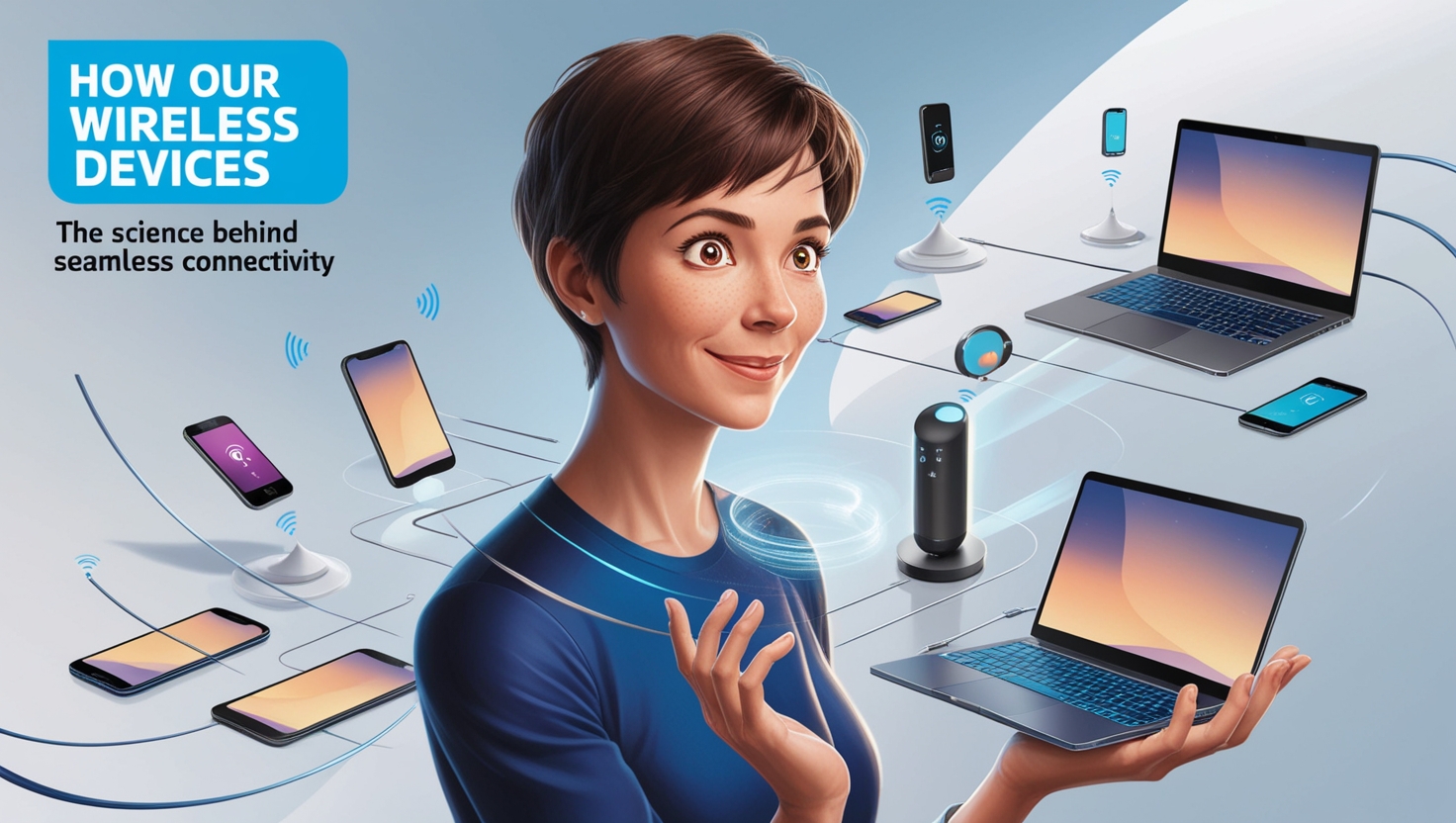
Wireless devices have become an integral part of our daily lives, enabling us to communicate, access information, and control gadgets without the need for physical connections. Whether it’s a smartphone, tablet, smartwatch, or wireless earbud, these devices are powered by sophisticated technology that allows data to flow invisibly through the air. But how exactly do wireless devices work? What makes it possible for you to stream videos, make calls, or send files without any wires?
In this article, we’ll explore the fascinating technology that powers our wireless devices, including radio waves, Wi-Fi, Bluetooth, cellular networks, and more. We’ll break down these complex systems into simple terms so that you can better understand how the invisible magic of wireless communication makes our connected world possible.
The Basics: Wireless Communication and Radio Waves
At the heart of all wireless communication is the transmission of data using radio waves. Radio waves are a type of electromagnetic wave, similar to light waves but with a much longer wavelength. They are used to transmit information over the air without the need for physical cables.
Wireless devices communicate by sending and receiving these radio waves. Here’s how it works in simple terms:
- Transmission: When you send a message or stream a video on your phone, the data (which is just information in binary form, made of 0s and 1s) is converted into radio waves by your device. These waves are then transmitted into the air using an antenna inside your device.
- Reception: Other devices, such as a Wi-Fi router, another smartphone, or a Bluetooth speaker, pick up these radio waves using their own antennas. The radio waves are then converted back into data, which your device can interpret—whether it’s displaying a webpage, playing music, or showing a notification.
Frequency Bands and Spectrum
The radio waves that wireless devices use fall into specific ranges of frequencies, known as frequency bands. Different types of wireless technology (such as Wi-Fi, Bluetooth, and cellular networks) use different parts of the electromagnetic spectrum to avoid interference.
- Wi-Fi typically operates in the 2.4 GHz and 5 GHz frequency bands.
- Bluetooth operates in the 2.4 GHz frequency band.
- Cellular networks operate in a wide range of frequencies, from 700 MHz to over 2 GHz, depending on the network generation (3G, 4G, 5G).
These frequencies are regulated by governments to ensure that multiple devices can coexist without causing interference with each other. This is why your Bluetooth earbuds won’t interfere with your Wi-Fi network, even though they might use the same general range of frequencies.
Wi-Fi: The Backbone of Wireless Internet
Wi-Fi is one of the most common types of wireless communication used today. It allows devices to connect to the internet without the need for cables, providing fast data transmission for everything from web browsing to streaming movies. Wi-Fi works by using a router, which acts as a central hub that sends and receives data to and from your wireless devices.
How Wi-Fi Works:
- Router: The Wi-Fi router connects to your internet service provider (ISP) through a wired connection. It then converts this wired data connection into wireless radio signals.
- Transmission: When you connect your smartphone or laptop to a Wi-Fi network, the device sends data (like a request to open a webpage) to the router via radio waves.
- Reception: The router processes this request and forwards it to the internet. Once the data is received back (e.g., the webpage you wanted to view), the router transmits it back to your device using radio waves.
Wi-Fi is essential for providing high-speed internet access over short distances, typically within a home or office environment. Wi-Fi standards, such as 802.11ac and the latest Wi-Fi 6 (802.11ax), improve speed, range, and reliability for modern wireless devices.
Bluetooth: Short-Range Wireless Communication
Bluetooth is a type of wireless technology that’s primarily used for connecting devices over short distances, typically within 10 to 30 meters. It’s ideal for pairing devices like headphones, speakers, smartwatches, or keyboards with your smartphone, laptop, or tablet.
How Bluetooth Works:
- Pairing: Bluetooth devices must first pair with each other to establish a secure, private connection. This process involves a handshake where devices exchange information and agree on the protocols they will use to communicate.
- Data Transmission: Once paired, the devices can transmit data between each other using radio waves in the 2.4 GHz frequency band. Bluetooth uses a method called frequency hopping, where the devices rapidly switch between different frequencies to minimize interference from other wireless devices.
Bluetooth has evolved over time, with modern versions like Bluetooth 5 offering faster data transmission, longer range, and lower power consumption. This makes Bluetooth ideal for wireless headphones, fitness trackers, and smart home devices.
Cellular Networks: Connecting to the World
Cellular networks allow mobile devices to connect to the internet and make calls, even when they’re far away from Wi-Fi. Cellular communication relies on a network of cell towers spread across large areas, providing seamless wireless connectivity.