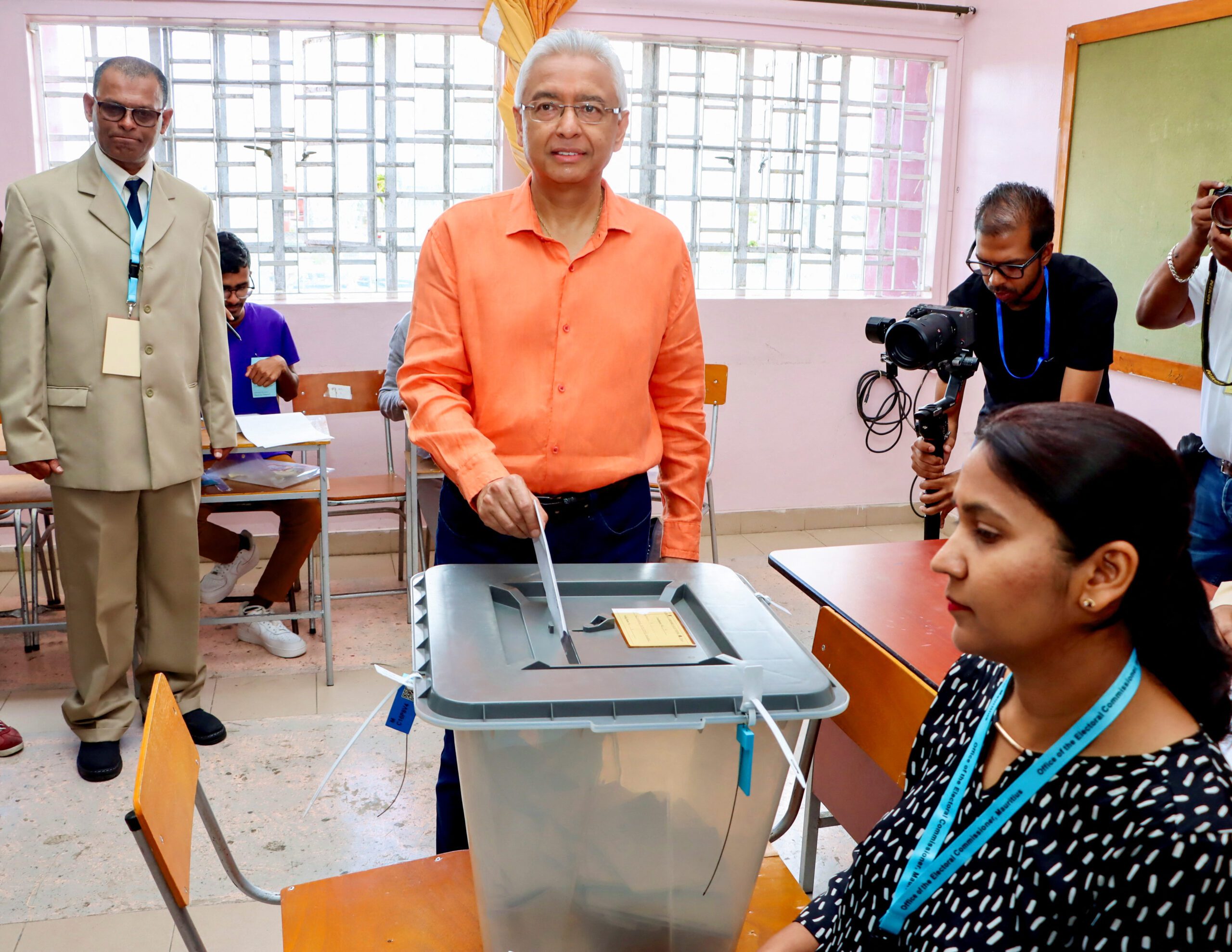
Mauritius held a parliamentary election on Sunday, with Prime Minister Pravind Kumar Jugnauth and his main rivals all focusing on addressing the growing cost of living crisis in the Indian Ocean nation.
Polls closed at 6 p.m. local time (1400 GMT), and results are expected to be announced on Monday, according to the country’s electoral authority.
The small island nation of about 1.3 million people has built its economy on offshore finance, tourism, and textiles, while also receiving aid from China. Despite forecasting 6.5% economic growth this year, down from 7.0% in 2023, many citizens feel disconnected from the country’s financial gains.
Jugnauth’s ruling Alliance Lepep coalition has promised to raise minimum wages, increase pensions, and reduce VAT on essential goods. The coalition also plans to use funds from an agreement with the UK regarding the Chagos Islands, where the US-UK Diego Garcia military base is located, to boost the economy.
“The prime minister’s coalition is focusing on economic prosperity, with promises of more money for different population segments,” said political analyst Subash Gobine.
The opposition, led by the Alliance du Changement coalition headed by Navin Ramgoolam, has also pledged to increase pensions, offer free transport and internet services, and lower fuel prices. The opposition includes the Linion Reform alliance, where leaders Nando Bodha and Roshi Bhadain have proposed alternating as prime minister if they win.
Voters are selecting representatives for the 62 seats in Parliament from 68 parties and five political alliances.
Music instructor Ivan Mootooveeren, 41, who cast his vote in the capital, Port Louis, told Reuters he was supporting the opposition due to a need for a new direction. Another voter, David Stafford, 36, emphasized that young people would play a pivotal role in the election, noting that voters are seeking economic innovation and job opportunities as well as fiscal reform.
Arvin Boolell, deputy leader of the Labour Party and a member of the opposition coalition, estimated voter turnout likely exceeded 75%, though the official turnout figure was not immediately available.
The party or coalition that secures more than half of the 62 parliamentary seats will also claim the prime minister’s office.
Earlier this month, Jugnauth’s government temporarily blocked social media platforms, citing national security concerns after leaks of private conversations between public figures. The ban was lifted the following day after backlash from opposition parties.