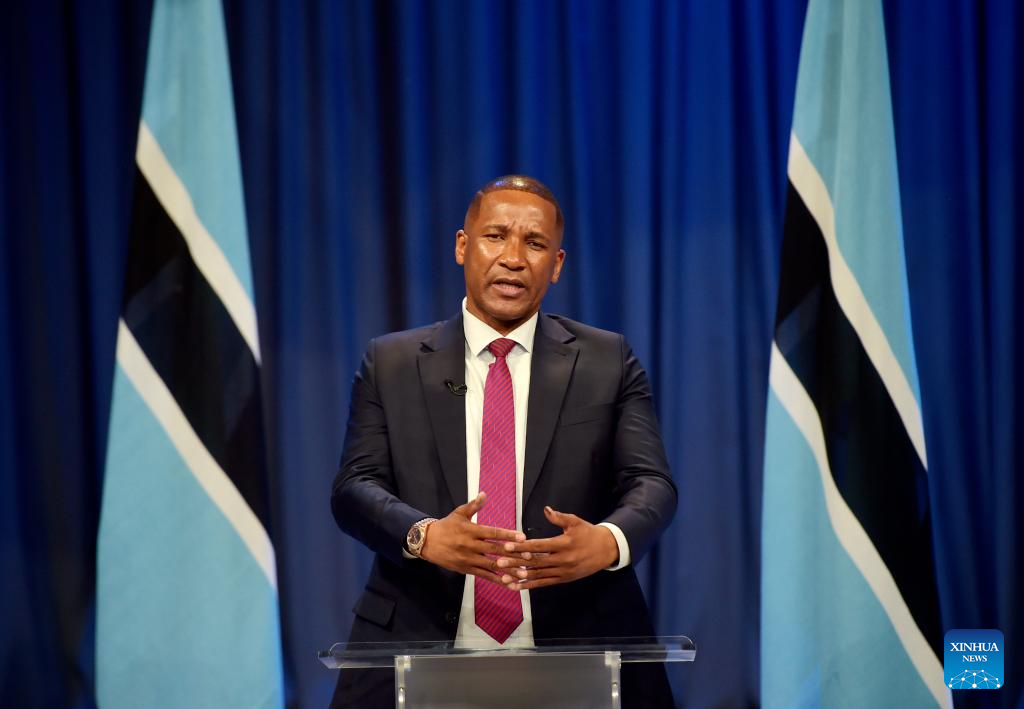
Botswana’s new President Duma Boko embodies the traits of a highly trained human rights lawyer: confident, articulate, and well-mannered. At 54 years old, his thoughtful and fluent speech reflects his legal education, first at the University of Botswana and later at Harvard Law School in the U.S.
Despite his humble demeanor following victory, Boko’s achievement of winning the presidency after three attempts showcases his relentless ambition. For over 50 years, opposition politicians have aspired to dethrone the formidable Botswana Democratic Party, but only Boko has succeeded in making that dream a reality.
The decisive nature of the Umbrella for Democratic Change (UDC) party’s victory surprised many, including Boko himself, who expressed astonishment at the scale of his win. Dressed in his signature dark blue suit, he refrained from boasting or extravagant celebrations during his initial remarks to the media on Friday.
“I can only pledge to [the people] that I will do my very best. Where I fail and fault, I will look to them for guidance,” he stated, setting a tone of humility and commitment.
Boko captured the nation’s attention amid challenging economic times with promises of change, job creation, and government stipends. “People fell in love with him, and this is the result,” noted journalist Innocent Selatlhwa during an interview with the BBC’s Focus on Africa podcast.
Throughout his campaign, Boko engaged supporters by inviting them to share their grievances, fostering a connection with younger voters. His approach was serious yet friendly, and he boldly chose to focus solely on the presidency rather than running for a parliamentary seat, a strategic risk that ultimately paid off.
Born in 1969 in Mahalapye, a small town in Botswana’s Central District, Boko has always been known for his respectfulness and sense of justice. “He was so fixated on doing the right thing,” shared a relative, reflecting on his deep-rooted values. His leadership skills emerged early as he was elected president of the student council during his school years.
Boko has established himself as one of Botswana’s top lawyers, and his political journey began when he became the leader of the Botswana National Front (BNF) in 2010. Under his guidance, the party shifted from its traditional communist ideals towards a more centrist approach. Frustrated by years of opposition defeats, Boko initiated an alliance of opposition parties, leading to the formation of the UDC.
Despite facing backlash for his previous comments about the academic staff at the University of Botswana—calling them “useless”—Boko stood firm in his beliefs, remarking, “The truth hurts” when confronted about his remarks.
His wife, Kaone Boko, revealed to the Mmegi newspaper that her husband is known for his principled nature, describing him as “stubborn” and unyielding in his pursuits. “He does not back down from a fight, no matter how big the enemy is,” she added.
This determination may well be the key to how Boko managed to overcome one of Africa’s most successful political parties, charting a new course for Botswana’s future.