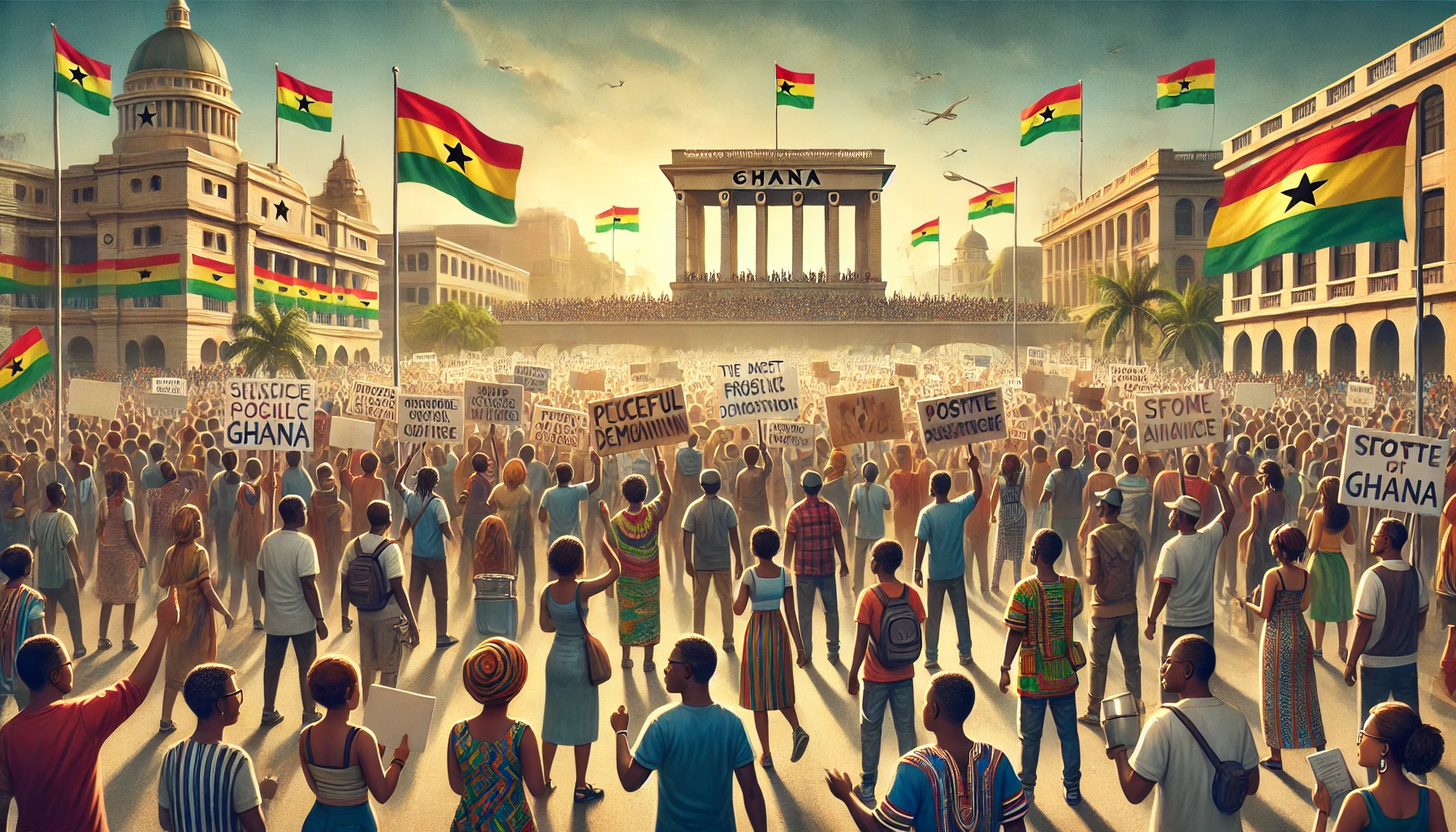
Ghana, a beacon of democracy in Africa, has a rich history of demonstrations that have shaped its political, social, and economic landscape. While protests are often associated with unrest, many demonstrations in Ghana have been a powerful force for constructive change. These movements have amplified the voices of the marginalized, held leaders accountable, and paved the way for key reforms. Here, we take a look at some of the most impactful demonstrations in Ghana’s history and how they have contributed to the nation’s progress.
1. The 1948 Accra Riots: Birth of Independence
One of the earliest and most significant demonstrations in Ghana occurred in 1948. The Accra Riots, sparked by ex-servicemen protesting poor treatment after World War II, led to the tragic killing of three soldiers by British police forces. The unrest that followed this incident awakened national consciousness and fueled the struggle for independence. The riots catalyzed political movements, eventually leading to the formation of the United Gold Coast Convention (UGCC), which championed self-governance.
Most notably, this period birthed Kwame Nkrumah’s political career. The events of 1948 set Ghana on a path to becoming the first African nation to gain independence from colonial rule in 1957.
2. June 4th Uprising: A Push for Accountability
In the late 1970s, Ghana faced rampant corruption, economic collapse, and widespread dissatisfaction with its leadership. The June 4th Uprising in 1979, led by Flight Lieutenant Jerry John Rawlings, was a key moment in Ghana’s political evolution. The uprising was a revolt against military rulers who were seen as corrupt and disconnected from the plight of the people.
Though the event was violent and resulted in the execution of several military leaders, it was instrumental in shaping the political discourse around accountability and justice. It reinforced the need for governance rooted in transparency, fairness, and the welfare of the people. This demonstration helped pave the way for Ghana’s transition from military to civilian rule.
3. The Kume Preko Demonstration: Defending Economic Rights
One of the largest and most impactful demonstrations in Ghana’s recent history was the Kume Preko demonstration of 1995. Led by opposition leaders, including future president Nana Akufo-Addo, the protest was organized against the introduction of the Value Added Tax (VAT) by the Rawlings administration. The economic downturn at the time left many Ghanaians feeling that the tax was an unfair burden on an already struggling population.
Despite the peaceful intentions, the demonstration turned violent, resulting in the deaths of several protestors. However, the protest succeeded in raising awareness of the economic plight of Ghanaians and led to a reconsideration of government policies. Kume Preko has since become a symbol of the Ghanaian people’s ability to mobilize for economic justice.
4. The OccupyGhana Movement: A Fight Against Corruption
Fast forward to the 21st century, and Ghana’s democratic space continues to thrive with active civic participation. One of the most successful modern-day protests has been the OccupyGhana movement, launched in 2014. This civil society group came together to demand better governance, transparency, and accountability from the government.
The movement, driven by educated professionals and middle-class citizens, organized peaceful demonstrations and used social media to rally support. Their efforts pressured the government to act against corruption and address systemic inefficiencies. The OccupyGhana movement underscored the power of peaceful, organized civic action in shaping public policy and governance in modern Ghana.