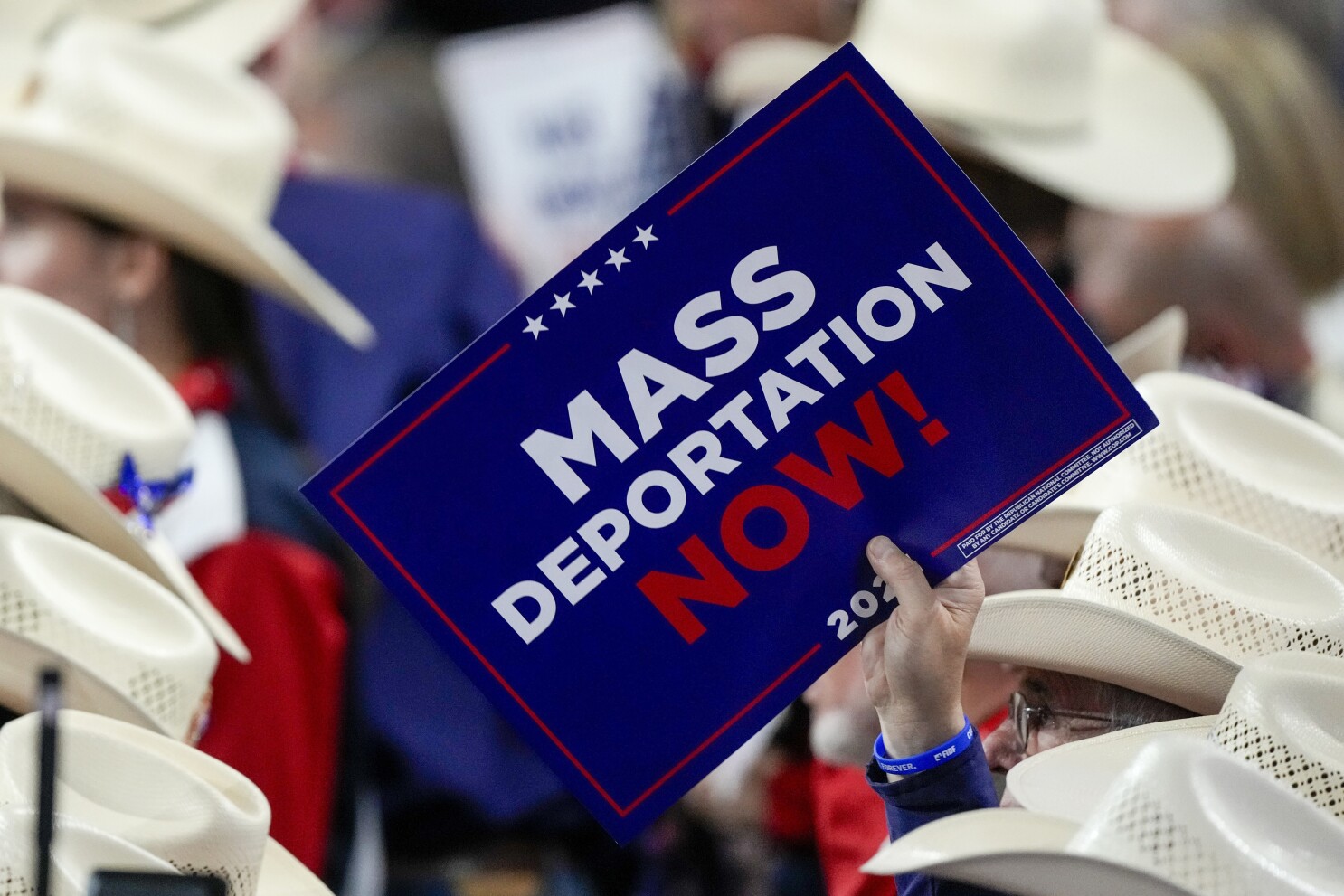
President-elect Donald Trump has reaffirmed his commitment to mass deportations of undocumented immigrants, asserting that costs will not prevent him from following through. In a recent interview with NBC News, Trump declared that securing the U.S. border would be an immediate priority when he takes office in January, stating, “It’s not a question of a price tag…we have no choice.”
Trump argued that his immigration stance, including mass deportation plans, was key to his election victory, appealing to Americans who want “strong” borders. “They have to come in legally,” he emphasized, adding that removing undocumented immigrants, particularly those involved in criminal activity, was necessary for national security. Vice President-elect JD Vance supported this goal, noting that they plan to start by removing a million individuals.
While immigration experts acknowledge logistical and legal challenges with a large-scale deportation program, advocates have expressed concern over the potential human impact. Legal and procedural requirements ensure due process for undocumented individuals, meaning that many would need court hearings before deportation—a process that could significantly increase the strain on the already backlogged immigration court system. Many cities and counties have also adopted sanctuary policies limiting cooperation with federal immigration authorities, complicating enforcement efforts.
In addition to legal hurdles, experts warn that implementing a mass deportation plan would require a dramatic expansion in ICE’s resources and cooperation from local authorities. Kathleen Bush-Joseph, policy analyst at the Migration Policy Institute, highlighted the challenges posed by sanctuary cities, saying, “There are many [local law enforcement agencies] who would not cooperate,” which would complicate any large-scale deportation efforts.
Trump has proposed measures like deploying the National Guard or using the U.S. military to support deportations. While his plan involves expanding ICE’s capacity, enforcing deportations on a mass scale could be challenging. Aaron Reichlin-Melnick, policy director at the American Immigration Council, noted the limited resources of ICE’s 20,000 agents and staff, saying, “To raise [deportations] up to a million would require resources that likely don’t exist.”
Additional obstacles include housing detainees during deportation proceedings and expanding deportation flights. The Biden administration has primarily focused deportation efforts on individuals recently detained at the border, with most interior deportations targeting individuals with criminal backgrounds. Raising deportations to levels mentioned by the Trump campaign would require extensive infrastructure, staffing, and partnerships with the nations receiving the deportees.
Trump’s proposal for a mass deportation system also entails significant financial costs. ICE’s transportation and deportation budget in 2023 was $420 million, covering around 140,000 deportations. Deporting a million individuals could drive costs into the billions, with additional funding needed for border enforcement measures like the border wall and a proposed naval blockade. Experts warn that increased deportations could lead to large encampments and other facilities to manage detainee populations, adding to the expense.
The Trump campaign’s stance could also come with a steep political price. Adam Isacson, an expert at the Washington Office on Latin America, cautioned that images of mass deportations could have negative public relations implications, recalling the backlash against family separations. “Every community in the U.S. would see people they know and love put on buses,” he said, predicting that public opposition could mount as families are separated in high-profile raids.
Historically, the U.S. has carried out mass deportations, most notably during Operation Wetback in 1954, when around 1.3 million Mexican nationals were deported. However, experts say the operation’s focus on Mexican men, combined with limited due process, makes it an unlikely model for today’s more complex and diverse migrant population.
As the administration prepares to take office, immigration experts anticipate potential challenges, both logistically and politically, if Trump moves forward with his mass deportation plans. While Trump views the effort as essential, immigration advocates argue that large-scale deportations would have deep social, economic, and humanitarian consequences for families and communities across the nation.