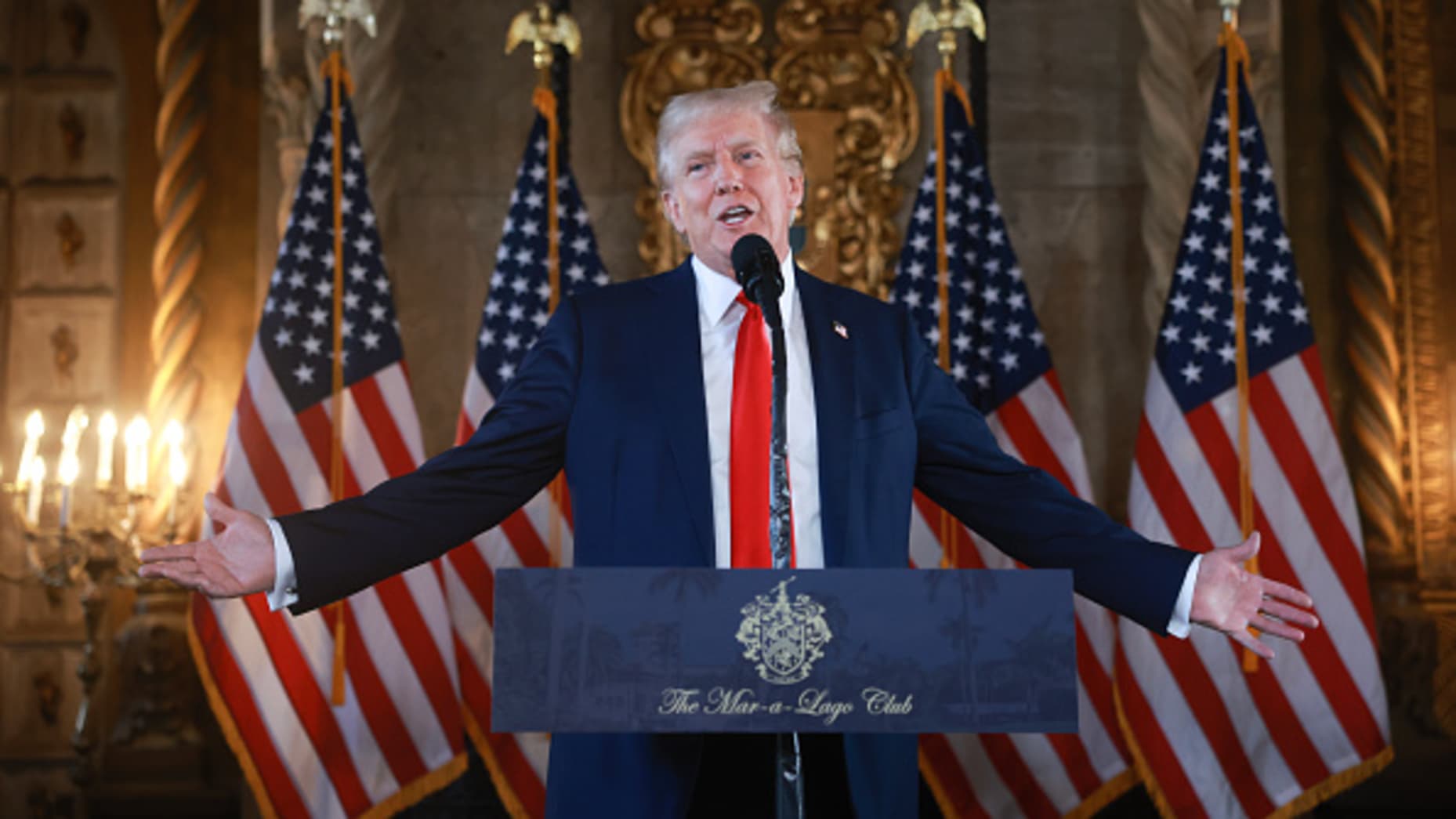
A waning U.S. presence in Africa means that President-elect Donald Trump’s administration will face significant challenges as it seeks to address blind spots in its understanding of the continent. With rising influence from China and Russia and an increase in jihadist insurgencies, Africa has grown more complex for U.S. foreign policy.
Interviews with officials and government watchdog reports reveal that the Biden administration’s lack of staff and resources at African embassies has hindered efforts to meet strategic goals. Over the past four years, diplomatic setbacks included the loss of a crucial intelligence base in Niger and the inability to secure an alternative base. Now, the U.S. finds itself without support from Russia-backed military juntas in the Sahel, just as the region becomes a terrorism hotspot.
A recent Gallup poll also shows that China has overtaken the U.S. in popularity across Africa. Cameron Hudson, a former CIA analyst, attributes this decline to missteps caused by inadequate staffing. He points to the U.S. being caught off guard by Sudan’s civil conflict in 2023 and a failed negotiation with Niger’s junta.
The U.S. State Department acknowledged the challenges in attracting applicants to African posts, citing limited access to schools and healthcare in remote areas, and stated that both financial and non-financial incentives are offered to encourage service.
The U.S. has struggled to make headway in Africa, particularly in gaining access to key mineral reserves. A flagship U.S.-backed railway project intended to transport resources through Angola remains years away from completion. Despite political promises to the continent, including a proposed presidential visit, Biden has not followed through on key pledges, such as expanding Africa’s representation in the U.N. Security Council and advocating for the African Union’s inclusion in the G20.
Two former officials from Trump’s first administration anticipate a pragmatic approach, focusing on competition with China and supporting U.S. businesses. Trump’s Africa policy may also take a more transactional stance with military leaders in the Sahel, reducing emphasis on democracy and human rights.
Retired Ambassador Tibor Nagy, a former Trump envoy, suggests that “Africa policy needs a bit of realism” and hopes a second Trump administration will yield more results through a pragmatic, transactional approach.
The ongoing diplomatic challenges are evident in State Department data, with reports detailing staffing shortages that disrupt U.S. goals across Africa. In the Central African Republic, for instance, embassy understaffing meant the ambassador had no note-taker for key meetings. In Guinea, home to vast bauxite reserves, the U.S. political section was temporarily vacant in 2023. Similarly, in Togo, the U.S. embassy struggled to implement Washington’s Global Fragility Act due to a lack of experienced personnel.
Amid the Ukraine and Middle East crises, Africa may not be Trump’s immediate focus, as he has yet to form an Africa policy team. Trump’s first term proposed cuts to the State Department and U.S. Agency for International Development and scaled back U.N. funding, a move some allies viewed as harmful to relations.
Peter Pham, former envoy to Africa’s Great Lakes and Sahel regions, anticipates a shift to conditional U.S. assistance under Trump. “We have to be more intentional,” Pham said, emphasizing accountability and capable partnerships.
Efforts to address staffing shortages have shown limited progress, despite the State Department hiring above attrition for the first time in 15 years. Foreign Service Director Marcia Bernicat recently highlighted new incentives aimed at attracting talent to fill these critical posts. However, the overall number of U.S. foreign service officers in Africa has dropped slightly since 2018.
Union president Tom Yazdgerdi called the situation “a national security concern” that requires urgent attention, adding that the limitations in Africa are both frustrating and potentially dangerous for U.S. interests.