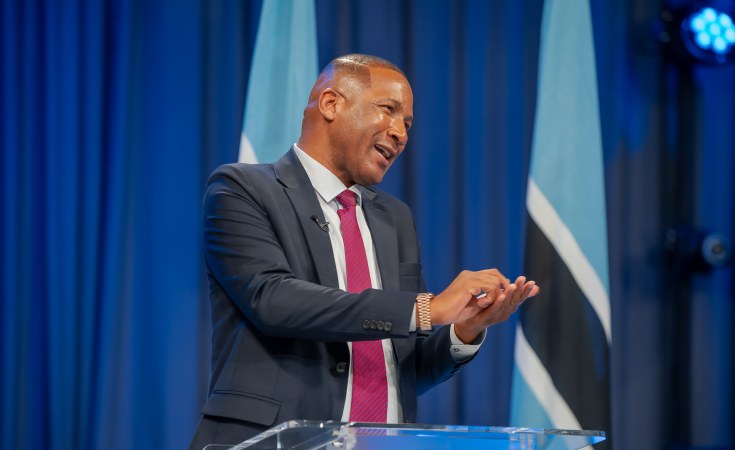
Botswana’s newly elected President, Duma Boko, has announced plans to grant temporary work and residence permits to undocumented Zimbabweans living in Botswana. Boko shared his vision for formalizing the status of Zimbabweans, explaining that they play a crucial role in the country’s labor force by performing jobs many locals are unwilling to do.
Speaking on the BBC Africa Daily podcast before his historic inauguration, Boko acknowledged that Botswana hosts one of the largest communities of Zimbabweans, many of whom fled economic challenges and political instability. However, he recognized the tension created by daily deportations and the limited access Zimbabweans have to essential services due to their undocumented status.
“People from Zimbabwe are already here, and by keeping them undocumented, we push them to live outside the law,” Boko explained. “We need a proper arrangement that brings them into the formal economy.” He added that formalizing their status could reduce crime and social tensions.
Zimbabweans in Botswana often work as domestic or farm laborers, and in many construction sites, Zimbabweans with skills in trades such as welding and plumbing fill critical roles. Boko emphasized that while the government builds up local skills, allowing Zimbabweans to work legally would bridge the skills gap and facilitate knowledge transfer to Batswana.
Boko’s proposal follows previous efforts to ease travel between Botswana and Zimbabwe, though these initiatives have faced backlash amid concerns of increased immigration. Addressing these concerns, Boko explained that his policy would be an opportunity for Botswana’s citizens to gain practical skills from Zimbabweans in various trades, further contributing to the economy.
As a human rights lawyer and founder of the Umbrella for Democratic Change (UDC), Boko campaigned on economic reform and job creation. His immediate priority, he stated, will be negotiating a new deal with diamond giant De Beers to ensure sustained revenue from diamond sales, boosting investor confidence and supporting his pledge to create 100,000 jobs annually over the next five years.
“We face an unemployment crisis, with almost 30% of our 2.4 million population jobless,” Boko told the BBC. To address this, he is also promoting entrepreneurship among young people, ensuring they have access to financing and markets.
Boko’s inauguration will be held in Gaborone’s national stadium, declared a public holiday in honor of the event. The ceremony is expected to draw international dignitaries, marking the start of a new chapter for Botswana under Boko’s leadership.